 If you notice your gums bleeding while flossing or that your gums look redder and puffier than usual, chances are you are dealing with gum (periodontal) disease to some degree.
Although certain factors can put an individual at an increased risk of developing gum disease, it can be prevented and managed through regular brushing and flossing, regular dental visits, maintaining a well-balanced diet, and avoiding smoking and other tobacco related products.
Periodontal disease occurs when plaque – a sticky, bacterial biofilm builds up and hardens on the tooth surface, forming calculus/tartar. If plaque and calculus are left on your teeth, your gums can become irritated and cause an immune response that breaks down the supporting tissues and underlying bone that hold your teeth in place.
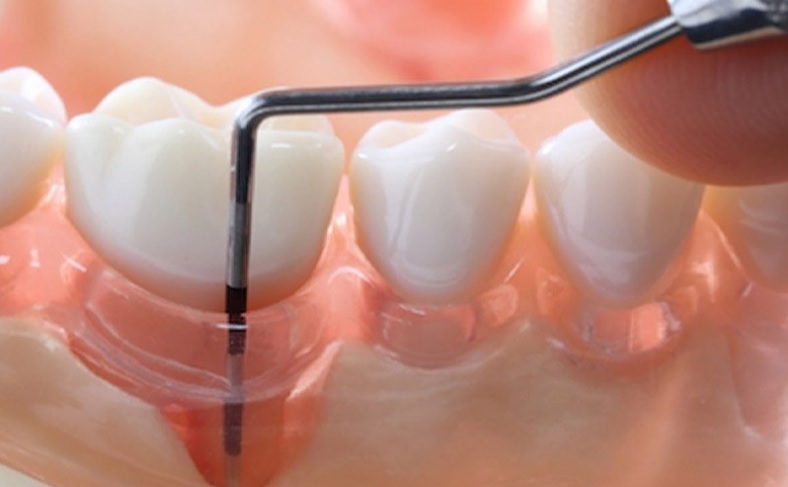
Following this, your gums begin to separate from your teeth, resulting in spaces called ‘periodontal pockets’. If these pockets are detected, your Hornsby dentist/oral health therapist may have to record their depths on a periodontal chart to monitor for any changes and to assess the severity of disease.
It is important that once detected, steps are taken to clean deep within the gums as these pockets will serve as food and plaque traps if not addressed early.
Difference Between Gingivitis and Periodontitis
You may have heard the words ‘gingivitis’ or ‘periodontitis’ being used by your dentist/oral health therapist or seen those words on a flyer in the waiting room. These two words describe the two different stages of gum disease:
- Gingivitis: Is the reversible, early stage of periodontal disease. It is characterised by redness and inflammation of the gums and if not treated early can result in periodontitis.
- Periodontitis: Is the irreversible, advanced stage of periodontal disease. This is when the surrounding bone and connective tissues becomes affected. At this stage, the destruction to bone cannot be reversed however the disease can be managed to prevent further damage.
Signs and Symptoms:
- Red and inflamed gums
- Bleeding gums when brushing your teeth or flossing
- Gum pain and tenderness
- Periodontal pockets (deep spaces between gums and teeth)
- Sensitivity especially around the gumline where the gum is pulling away from the tooth.
- Loose teeth
- Foul breath or taste in mouth
Risks
While bacterial plaque and calculus deposits are the direct link to periodontal disease, several other factors can place an individual at higher risk of developing periodontal disease than others. These include:
- Medications and other health conditions – your overall health can majorly impact your oral health.
- Smoking and other tobacco products – can mask some of the symptoms but actually increase the extent and severity of periodontal disease.
- Genetics
- Elevated stress levels
- Hormone levels – particularly pubescent teens and pregnant woman.
- Oral hygiene – brushing and flossing technique and frequency.
- Diet – poor nutrition.
- Malpositioned teeth, defective fillings, tooth shape, braces, and bridgework – when not cleaned effectively while brushing and flossing, these can act as food and plaque traps.
While these are all risk factors for periodontal disease, regular dental visits can help identify these risk factors as well as ways of minimising their interplay in disease progression.
Treatment and Prevention
During your regular checkup and clean at Hornsby Dental, if your dentist/oral health therapist notes signs of gum disease, this will be discussed with you as well as your treatment options. If the disease is not yet at a severe stage, you may have the option of a deep clean below the gumline with frequent recall appointments.
If the disease is at a more advanced stage where surgical intervention could be required, it may be recommended that you see a periodontal specialist that can provide better treatment options for your needs.
The key is prevention through twice daily brushing, once daily flossing, regular teeth cleaning and smoking cessation. If the disease is diagnosed early, its progression can be halted before any destruction of soft tissues and bone around your teeth, helping you to live with a happy and healthy smile.
Noticing bleeding or receding gums? Learn about our gum disease treatment in Hornsby, including deep cleaning from $280 per quadrant. See our price list or call (02) 8090 1100.