
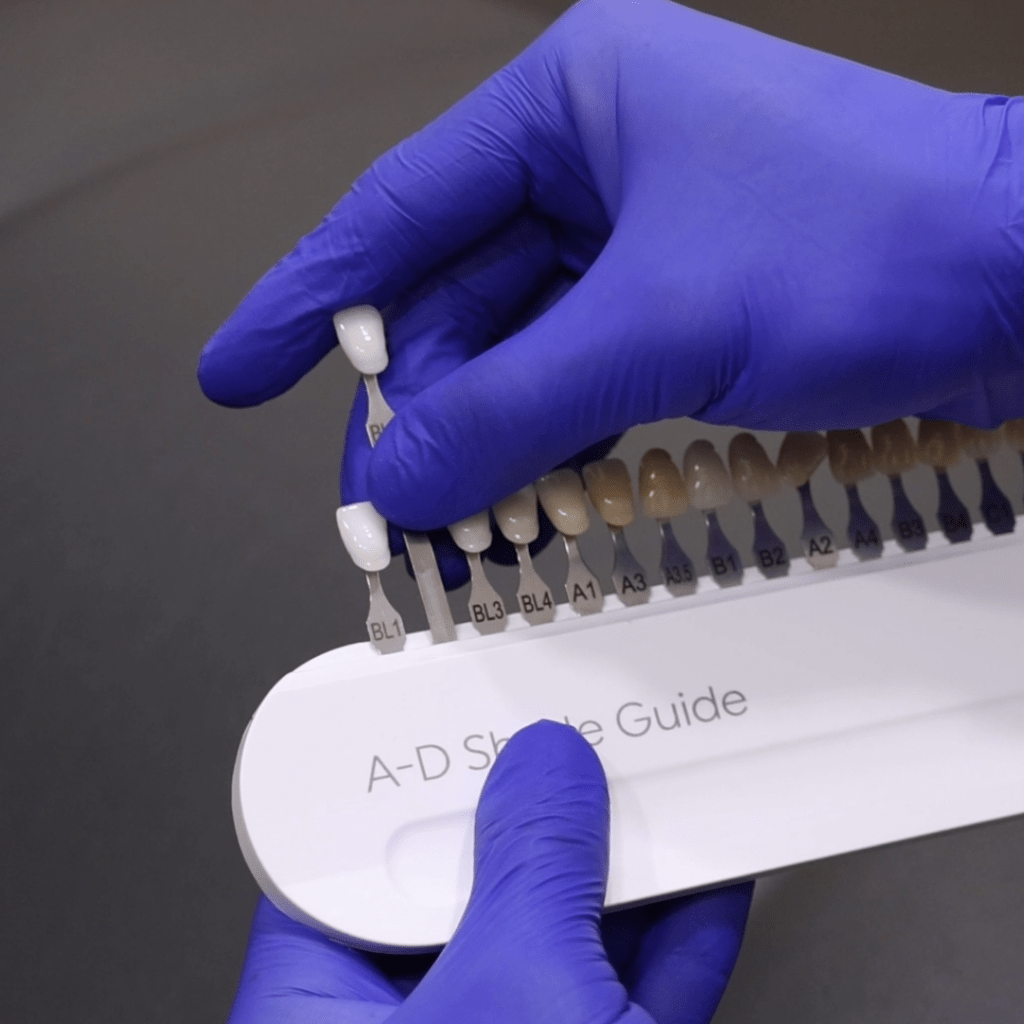
Composite veneers use resin bonded to selected tooth surfaces. Preparation varies; any enamel removal is irreversible. Staining, wear, chipping or loss of bonding can occur, and maintenance, repair or replacement will be needed over time.
Whether composite veneers are suitable depends on your teeth, bite and oral health, which your dentist will assess at a consultation.
Composite bonding uses the same tooth-coloured resin as composite veneers, applied to part of a tooth rather than the whole front surface. It is often used to:
Your dentist matches the shade, bonds the resin to the tooth, then shapes and polishes it, usually in a single visit with little or no drilling. At Hornsby Dental, composite veneers start from $700 per tooth. Smaller bonding repairs are quoted after your dentist has examined the tooth.
Like all dental treatment, bonding has risks and limits: resin can stain or chip, and it is not suitable for every tooth. Your dentist at Hornsby Dental will check whether bonding, a composite veneer or another option suits you.
Composite bonding usually repairs or reshapes part of a tooth, such as a chipped edge or a small gap. A composite veneer covers the whole front surface of the tooth. Both use tooth-coloured resin that is shaped and polished in the chair.
At Hornsby Dental, composite veneers start from $700 per tooth. Smaller bonding repairs are quoted after your dentist has examined the tooth.
The amount of preparation and pain management depend on the individual treatment plan. Sensitivity and gum problems are possible. Your dentist will explain what to expect and when to seek review.
Bonding can last several years with good care. Resin can stain or chip over time, and it may need polishing, repair or replacement. Regular check-ups help keep it looking its best.
Small bonding repairs are usually done in a single visit after an assessment. Your dentist will explain the plan and cost before treatment starts.
Composite veneer treatment involves assessment, planning, application of resin, and shaping and polishing. Your dentist will explain the proposed treatment, risks, limitations, alternatives and costs before you decide whether to proceed.
Your dentist will examine your teeth, gums and bite, discuss your goals, and explain suitability, treatment options, risks, limitations and costs. Choosing no cosmetic treatment is also an option.
Your dentist will discuss the proposed shade and shape of the composite veneers with you. The plan depends on your teeth, bite and oral health, and results vary between individuals.
The dentist prepares the tooth surface for bonding using an etching solution and adhesive. The amount of tooth preparation depends on the treatment required and will be discussed with you beforehand.
The dentist applies and shapes the composite resin directly on the tooth. A dental curing light is used to harden the material. Composite veneers require ongoing care and may need repair or replacement.
The dentist adjusts the shape, polishes the composite and checks your bite. Further adjustments may be needed after treatment.
Composite veneers and bonding: Resin is bonded to selected tooth surfaces. Preparation varies; any enamel removal is irreversible. Due to material limitation, staining, wear, chipping or loss of bonding can occur. Sensitivity, gum problems and further treatment are possible. Maintenance, polishing, repair or replacement will be needed over time. Read veneer risks, recovery and alternatives.
These images show the outcome for the individual patients pictured. Results vary from person to person and are not a prediction of your outcome. Any surgical or invasive procedure carries risks. Before proceeding, you should seek a second opinion from an appropriately qualified health practitioner.
Access our detailed price guide to understand the investment in your dental care options.
Composite veneers are tooth-coloured resin applied directly to your teeth and sculpted to improve their shape and colour, usually without removing much natural tooth structure.
Composite veneers start from $700 per tooth, with interest-free payment plans from $40 per week (subject to approval). See our full price list.
Composite veneers need ongoing care. Staining, wear, chipping or loss of bonding can occur, and maintenance, polishing, repair or replacement will be needed over time.
In many cases, yes – they are applied and shaped in the chair in a single appointment.
Composite veneers are from $700. Porcelain veneers are from $1,490 per tooth. Material choice, preparation and maintenance needs depend on the individual case. Your dentist can explain suitability, risks, limitations and alternatives.