
Invisalign vs Braces:
Which Orthodontic Option Is Right for You?
If you’re considering teeth straightening, one of the most common questions is Invisalign vs braces—which option is more suitable for your needs? Both treatments are widely used to address concerns such as crooked teeth, spacing, and bite alignment, but they differ in approach, appearance, and maintenance.
Whether you’re exploring Invisalign Sydney, Invisalign Hornsby, or looking into braces Sydney, understanding how each option works can help you make a well-informed decision in consultation with your dental professional.
What Are Braces?
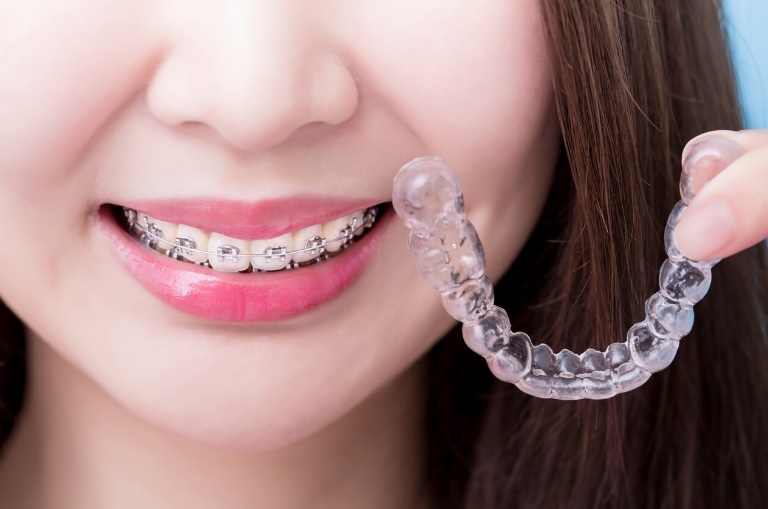
Braces are a traditional orthodontic treatment that uses brackets, wires, and sometimes elastic bands to gradually move teeth into alignment. The brackets are typically attached to the front of the teeth, although other options such as ceramic (tooth-coloured) or lingual (behind-the-teeth) braces may also be available.
Braces apply continuous, controlled pressure over time, allowing for precise tooth movement. Because they are fixed in place, they work consistently without needing to be removed by the patient.
For patients considering braces Hornsby or braces Sydney, this option is often recommended for more complex orthodontic concerns.
What Is Invisalign?
Invisalign is a system of clear, removable aligners designed to gradually straighten teeth. Each set of aligners is custom-made and worn for a specified period before progressing to the next set in the series.
The aligners are made from transparent plastic, making them a more discreet alternative to traditional braces. Small tooth-coloured attachments may be used in some cases to assist with specific tooth movements.
Patients searching for Invisalign Hornsby or Invisalign Sydney often choose this option for its convenience and less noticeable appearance.
Advantages of Braces
Braces continue to be a reliable and widely used orthodontic solution.
Suitable for complex cases
Braces are often effective for a broad range of orthodontic concerns, including more complex alignment and bite issues.
Continuous treatment
Because braces are fixed, they work continuously without needing to be removed or reinserted.
Less dependent on compliance
Since braces remain in place, treatment progress does not rely on remembering to wear an appliance for a set number of hours each day.
Considerations for Braces
While effective, braces may involve some adjustments.
Appearance
Traditional metal braces are visible, which may be a concern for some individuals.
Comfort
Mild discomfort may occur, particularly after adjustments.
Oral hygiene and diet
Cleaning around brackets and wires requires extra care, and certain foods may need to be avoided.
Advantages of Invisalign
Invisalign offers a different approach that may suit patients seeking flexibility.
Discreet appearance
Clear aligners are designed to be less noticeable than traditional braces.
Removable convenience
Aligners can be removed for eating, drinking, brushing, and flossing.
Digital planning
Some Invisalign treatments use digital scans to map out tooth movement and provide a visual representation of the treatment plan.
Lifestyle-friendly
With fewer dietary restrictions and easier cleaning, many patients find Invisalign fits well into daily routines.
Considerations for Invisalign
Invisalign may not be suitable for all cases.
Not ideal for complex cases
Some orthodontic conditions may require alternative treatments such as braces.
Requires consistent wear
Aligners generally need to be worn for 20–22 hours per day for effective results.
Maintenance
Aligners must be cleaned regularly and removed before eating or drinking anything other than water.
Invisalign vs Braces: Key Differences
When comparing Invisalign vs braces, the main differences come down to:
Appearance: Invisalign is more discreet; braces are more visible
Removability: Invisalign can be removed; braces are fixed
Suitability: Braces may be preferred for complex cases
Maintenance: Invisalign allows easier cleaning; braces require more care around brackets
Compliance: Invisalign requires consistent wear; braces work continuously
A personalised consultation is essential to determine which option is appropriate for your individual situation.
Cost Considerations
The cost of orthodontic treatment varies depending on the complexity of the case, treatment duration, and the type of appliance used.
When researching Invisalign cost, it’s important to note that pricing can differ between patients. Similarly, braces cost Sydney can vary depending on the type of braces and treatment requirements.
At Hornsby Dental, both Invisalign and traditional braces are available following a clinical assessment.
Invisalign is available with interest-free payment plans from $25 per week, depending on the treatment plan.
Braces are available with treatment costs ranging from $4,000 to $8,000, or approximately $77 to $154 per week*.
*Subject to finance approval, fees and charges. Terms and conditions apply.
A consultation is required to assess your oral health, discuss your goals, and provide a personalised treatment plan and cost estimate.
Invisalign and Braces in Hornsby
If you are considering Invisalign Hornsby or braces Hornsby, access to a qualified dental professional is an important part of your decision-making process. Treatment planning should be tailored to your individual dental condition, goals, and preferences.
Patients exploring Invisalign Sydney or braces Sydney are encouraged to seek professional advice to better understand their options and expected outcomes.
Making the Right Choice
Choosing between Invisalign and braces involves more than just aesthetics. Factors such as dental complexity, lifestyle, and your ability to follow treatment recommendations all play a role.
A thorough consultation will help determine:
Whether you are a suitable candidate for Invisalign
Whether braces may be more appropriate for your case
The expected duration of treatment
Estimated costs and available payment options
Final Thoughts
The decision between Invisalign vs braces is a personal one that should be guided by professional advice and a clear understanding of your options.
Both treatments are designed to improve alignment and support long-term oral health. By considering the advantages and limitations of each, you can choose an option that aligns with your needs and lifestyle.
If you’re exploring Invisalign cost Sydney or braces cost Sydney, the most accurate way to proceed is by booking a consultation with a dentist Hornsby. This allows for a tailored assessment and a treatment plan suited to your individual goals.