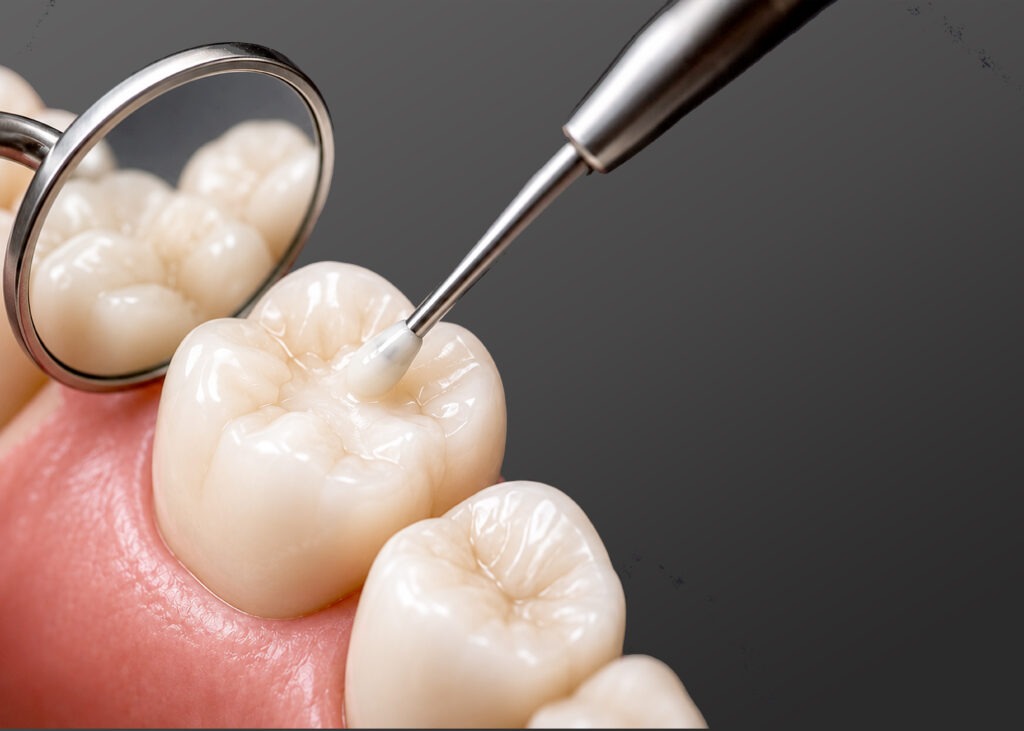
A filling repairs a tooth that has been damaged by decay, wear or a small fracture. The dentist removes the decayed or weakened part of the tooth, cleans the area and rebuilds it with a restorative material so the tooth can function again and bacteria are sealed out.
Treating a cavity while it is small generally means less of the tooth has to be removed. Left alone, decay tends to spread deeper, where it can reach the nerve and lead to pain, infection or the need for root canal treatment or extraction.
Fillings do not last indefinitely and are not suitable for every damaged tooth. Your dentist at Hornsby Dental will examine the tooth, usually with an x-ray, and explain which type of restoration they recommend and why.
No. Amalgam (silver) fillings are not placed at our Hornsby practice. We use tooth-coloured materials, mainly composite resin and glass ionomer cement, and the choice depends on the size and position of the cavity. If you have existing amalgam fillings, they do not automatically need replacing; your dentist can check their condition and talk through your options.
Small cavities, and those near the gumline or in baby teeth, are sometimes restored with glass ionomer cement. Composite resin is used for most other fillings in front and back teeth. When a large part of the tooth is missing, a filling may not be strong enough and a crown may be recommended instead.
It varies with the material, the size and position of the filling, your bite, and how well the tooth is looked after. All fillings wear over time and may eventually chip, leak or need replacing. Regular check-ups allow them to be monitored.
Most single fillings are completed in one visit.
With local anaesthetic, you should feel pressure and vibration but not sharp pain. Very small or shallow fillings can sometimes be done without numbing. Afterwards the tooth may be sensitive to temperature or biting for a few days. Contact us if it does not settle or your bite feels high.
Wait until the numbness wears off before eating so you do not bite your cheek or tongue. After that, brush twice a day with fluoride toothpaste, clean between your teeth daily, and limit frequent sugary snacks and drinks, since new decay can form around the edge of a filling.
A filling may be recommended if your dentist finds:
Possible signs include sensitivity to sweet, hot or cold foods, pain on biting, a rough edge, food catching between teeth, or a visible hole or dark spot. Many cavities cause no symptoms at first and are picked up at a check-up or on an x-ray.
A filling is not always the right repair. Teeth with extensive damage may need a crown, and teeth where decay has reached the nerve may need root canal treatment first. Very early decay can sometimes be managed with fluoride and monitoring instead of a filling.
Fillings are among the most common dental procedures, but they carry some risks, which your dentist will discuss with you:
More information is on our dental treatment risks page.
Tooth-coloured fillings at Hornsby Dental range from $170 to $550. The fee depends on how much decay is present and how many surfaces of the tooth need to be restored, so a small filling on one surface costs less than a large filling involving several.
If a filling is not suitable, our current price guide lists porcelain crowns from $1,800 and root canal treatment from $800 to $2,500 (not including the final restoration).
If you have private health insurance with dental extras, part of the fee may be claimable, depending on your fund and level of cover.
These fees are an estimate only and not a final quote. Your dentist will confirm the cost for your tooth after examining it. See the full price list.
Amalgam is a metal alloy that was the standard filling material for many decades. It is hard-wearing, but it is silver-grey in colour and more healthy tooth usually has to be removed to hold it in place. Amalgam is not offered at Hornsby Dental. If you have older amalgam fillings, your dentist can review them at your check-up and let you know whether any need attention.
Glass ionomer cement (GIC) is a tooth-coloured material that bonds chemically to the tooth and releases a small amount of fluoride. It is less resistant to wear than composite resin, so it tends to be used for small fillings, areas near the gumline that are not under heavy biting pressure, baby teeth, and as an interim restoration. It is generally not chosen for large fillings on the chewing surfaces of back teeth.
Composite resin is a tooth-coloured material that is bonded to the tooth and hardened with a curing light. It can be shade-matched to your teeth and is used for most fillings in both front and back teeth. Because it bonds to enamel and dentine, less tooth usually needs to be removed than with amalgam. Composite can stain or wear over time, and very large composite fillings may be more prone to chipping.
Access our detailed price guide to understand the investment in your dental care options.
Tooth-coloured fillings range from $170 to $550, depending on the size of the decay and how many surfaces of the tooth need to be filled. See our price list.
For most small to medium cavities, tooth-coloured composite resin is the most common choice. Larger cavities may need a ceramic restoration or a crown. Read our guide: which dental fillings are best?
Most fillings are completed in a single appointment under local anaesthetic.
Composite fillings set straight away, but wait until the numbness wears off before eating so you don’t bite your cheek or tongue.
Only if they are cracked, leaking or have new decay underneath. We’ll check them at your regular check-up and clean.