Full mouth reconstruction may involve several dental treatments. Whether it is appropriate depends on oral health, medical history and individual needs. Your dentist can explain the proposed procedures, potential benefits, risks, limitations and alternatives, including no treatment where appropriate.
The treatment plan, appointment needs, recovery and ongoing care depend on the individual case. Read procedure-specific risks, recovery and alternatives.
Full mouth reconstruction, also known as full mouth restoration, is a comprehensive dental procedure that aims to restore the functionality, health, and aesthetic appearance of your entire mouth. This treatment involves addressing multiple dental issues that affect both the function and the appearance of your teeth, gums, and bite.
Over time, our teeth naturally undergo wear and tear from daily use, including chewing, grinding, and exposure to acidic food and drinks. For some people, this process can be accelerated by habits like teeth grinding (bruxism), which often occurs at night. While other parts of the body can repair themselves, our teeth cannot. As a result, the damage caused by these factors can lead to significant problems, including tooth decay, tooth loss, misaligned bites, and a general reduction in the vertical dimension of the teeth.
Tooth wear and bite changes require individual assessment. Your dentist can discuss whether any treatment is indicated.
A full mouth reconstruction plan may combine restorative and other dental procedures. Achievable changes, risks and limitations will be discussed before treatment. Outcomes vary and further treatment may be needed.
A variety of issues can lead to the need for a full mouth reconstruction.
Years of use, grinding, and chewing can cause your teeth to become worn down and damaged.
Missing teeth, whether from decay, injury, or wear, can impact your bite and the overall appearance of your smile.
Overcrowded, crooked, or misaligned teeth can not only affect your smile but also make it more difficult to maintain good oral hygiene, leading to tooth decay and gum disease.
Advanced gum disease can lead to tooth loss and severely affect your smile and overall dental health.
Trauma to the teeth, such as from accidents or sports injuries, can cause fractures, breaks, and other damage to your teeth.
This common habit often leads to worn-down teeth, jaw pain, and even damaged dental restorations.
The proposed treatments depend on the underlying dental problems and individual assessment. A full mouth reconstruction is not automatically appropriate for every patient.
The process of full mouth reconstruction begins with a thorough evaluation of your oral health. This includes taking detailed x-rays, diagnostic impressions, and photographs to assess the status of your teeth, gums, and jaw. We also consider your overall facial structure and how your smile complements your features.
Once all the necessary information has been gathered, we’ll meet with you to discuss your goals and expectations for the treatment. Your preferences regarding the appearance of your teeth and the overall aesthetic of your smile will guide our approach.
Once we have a complete understanding of your dental needs and goals, we will create a comprehensive, tailored treatment plan that addresses all aspects of your dental health. The treatment plan may involve multiple procedures, such as:
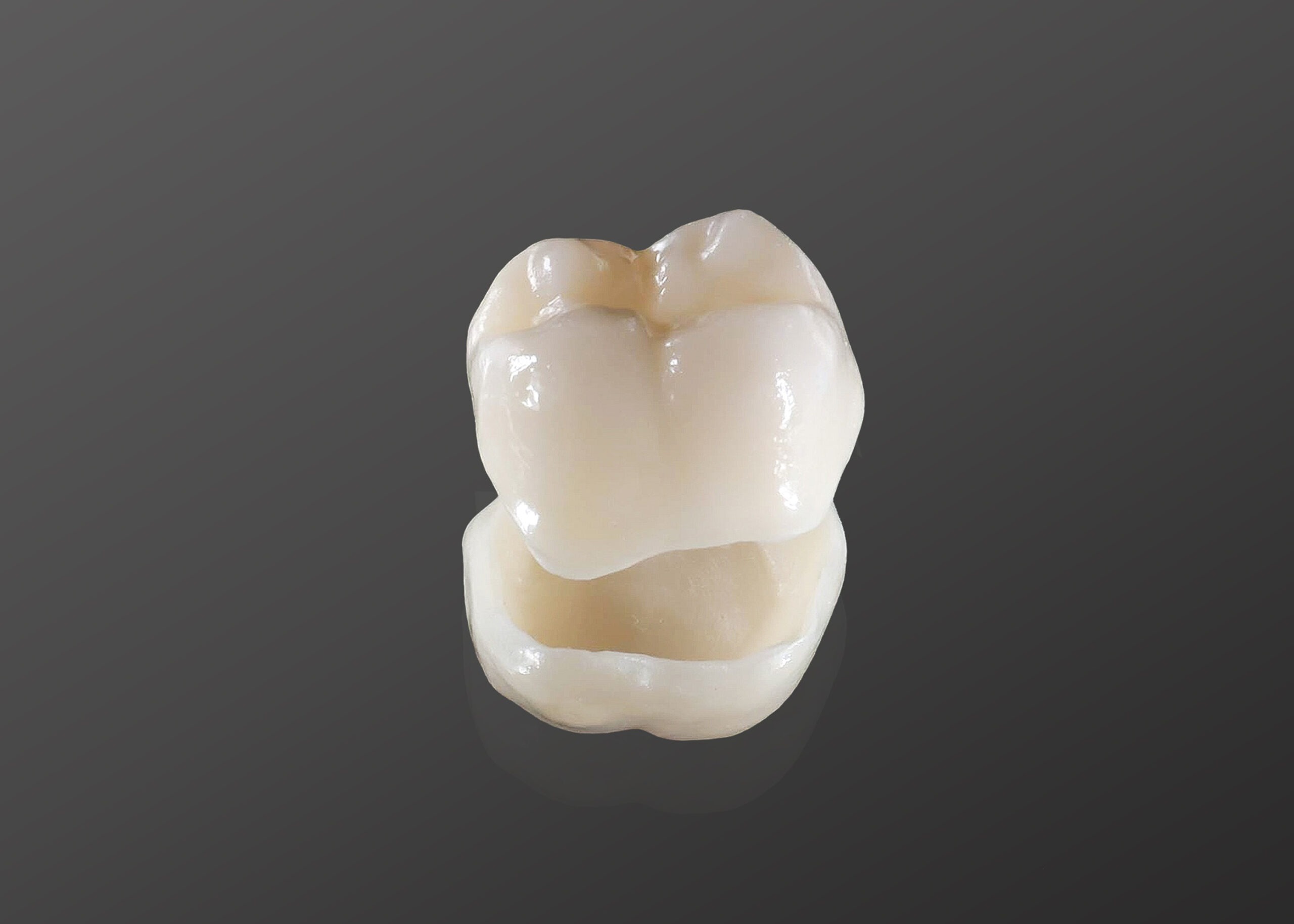
To restore damaged or worn-down teeth.
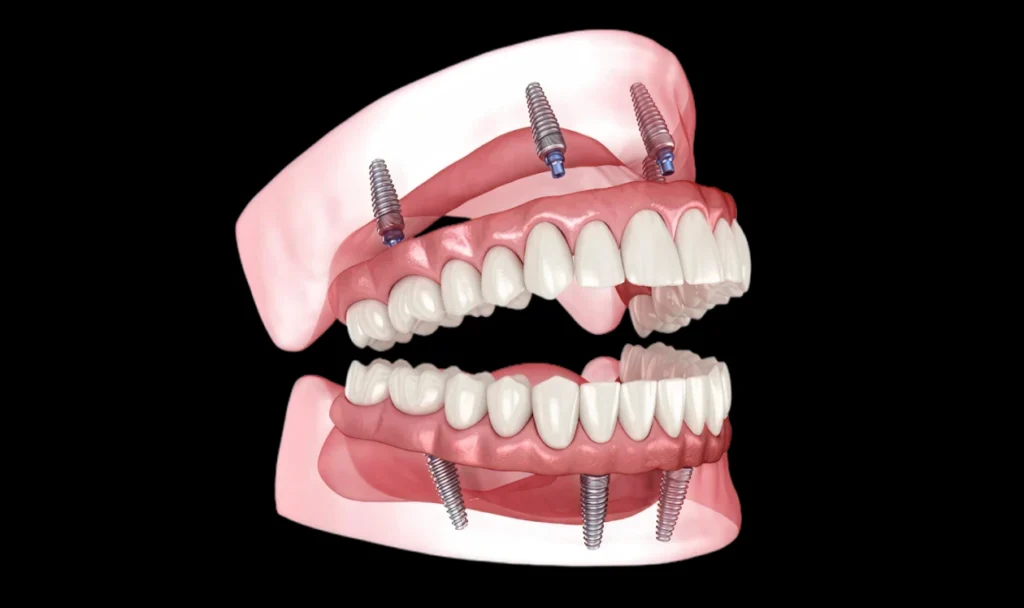
To replace missing teeth and restore function.
To improve the appearance of damaged or discoloured teeth.
To replace missing teeth with restorations selected after an individual assessment, with ongoing maintenance and possible repair or replacement.
To straighten misaligned teeth and correct bite issues.
To address any issues with your gums that may be contributing to your dental problems.
Clinical records and models may be used for treatment planning and discussion. A planning model does not guarantee the final outcome.
Once you’re happy with the treatment plan, we’ll begin the process of restoring your smile. Treatment will be carried out in phases, allowing us to address the most urgent or critical concerns first, such as gum disease or decayed teeth. As your treatment progresses, we will gradually rebuild your teeth and restore their appearance, function, and vertical dimension.
Throughout this process, we’ll keep you informed and involved, making sure that each step aligns with your desired outcome. You’ll also have the opportunity to ask any questions or express concerns at any time. We want you to feel confident and comfortable throughout your full mouth reconstruction journey.
Follow the treating dentist’s instructions for eating, cleaning and review. Restorations and the underlying teeth need ongoing care and may require repair, replacement or further treatment.
Each procedure carries potential risks and limitations. Your dentist will explain aftercare, review and ongoing maintenance; further treatment may be required.
A full mouth reconstruction is a significant investment in your health and well-being. While this treatment can be costly, the benefits far outweigh the financial investment. The proposed restoration aims to address missing teeth. Function, stability and maintenance requirements depend on the individual case.
At Hornsby Dental, we understand that the cost of full mouth reconstruction can be a concern for some patients. That’s why we offer interest-free payment plans to make this treatment more accessible. Our team will work with you to develop a payment plan that fits your budget, with the terms explained before you decide.
At Hornsby Dental, we take a holistic, patient-centred approach to full mouth reconstruction. Our team of experienced and skilled dentists is committed to providing personalised care that addresses your unique dental needs. Whether you require restorative treatments, cosmetic enhancements, or both, we’ll work with you to create a treatment plan that restores your smile to its full potential.
Ask your dentist about the treatment plan, who will provide each procedure, the potential benefits, risks, limitations and alternatives. You may seek a second opinion.
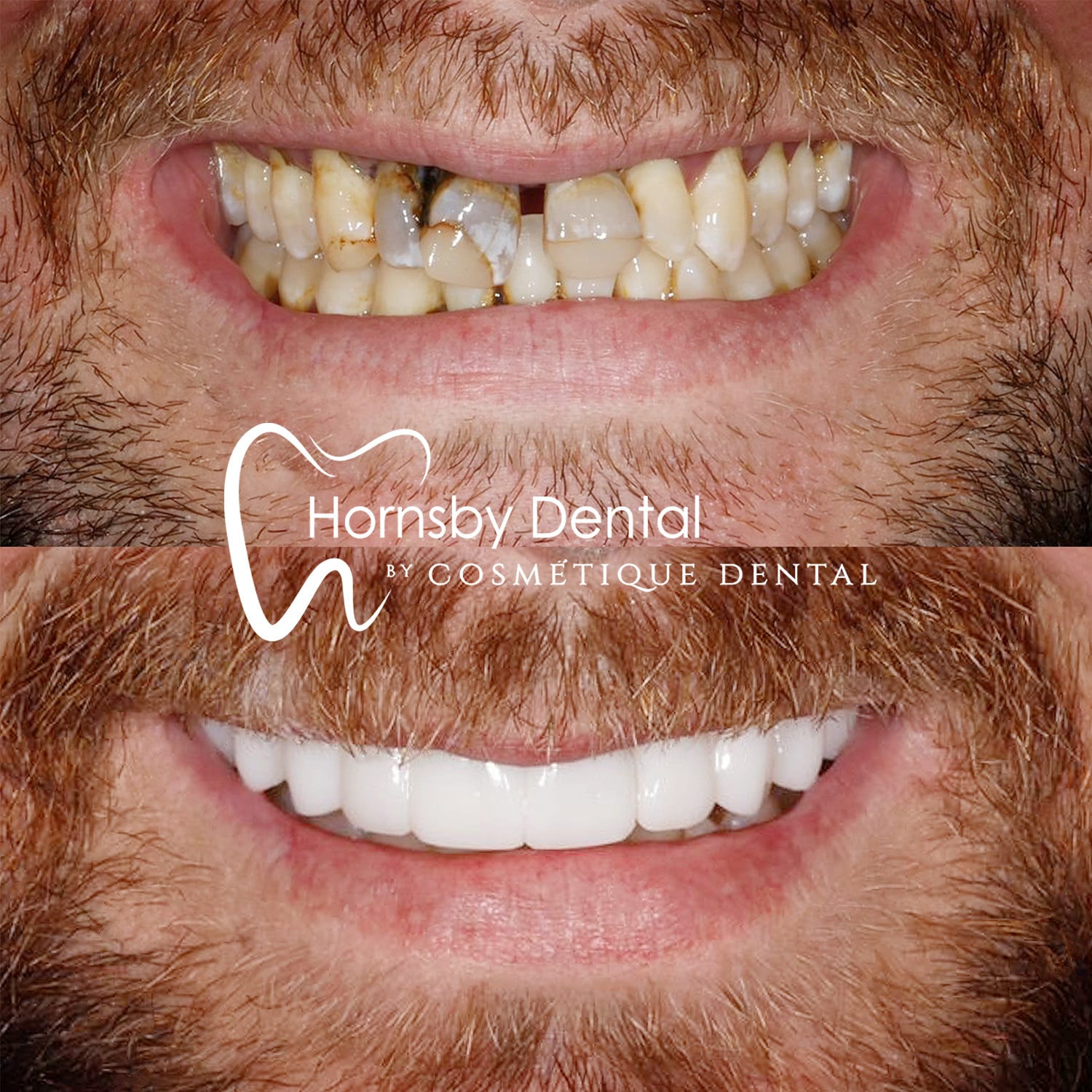
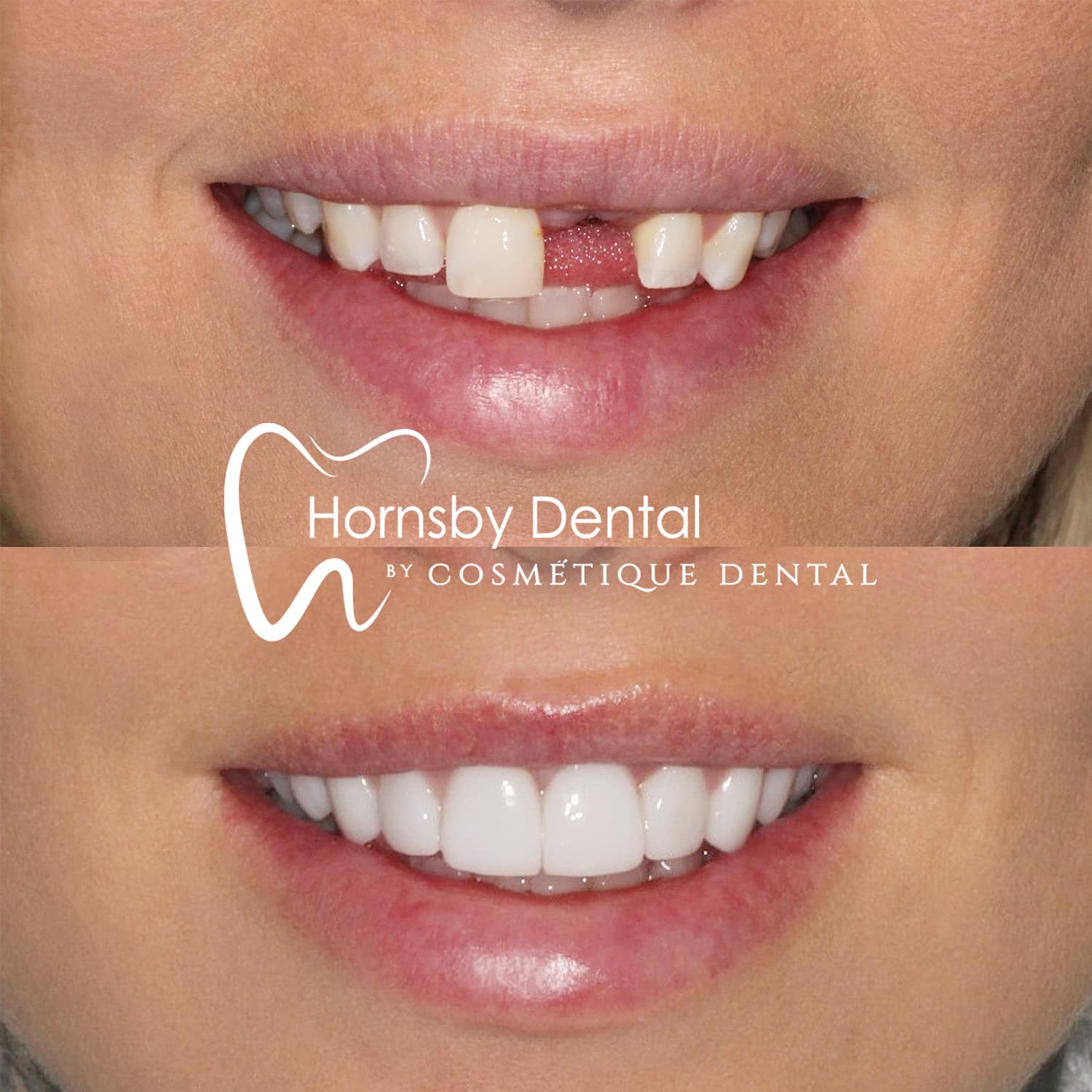
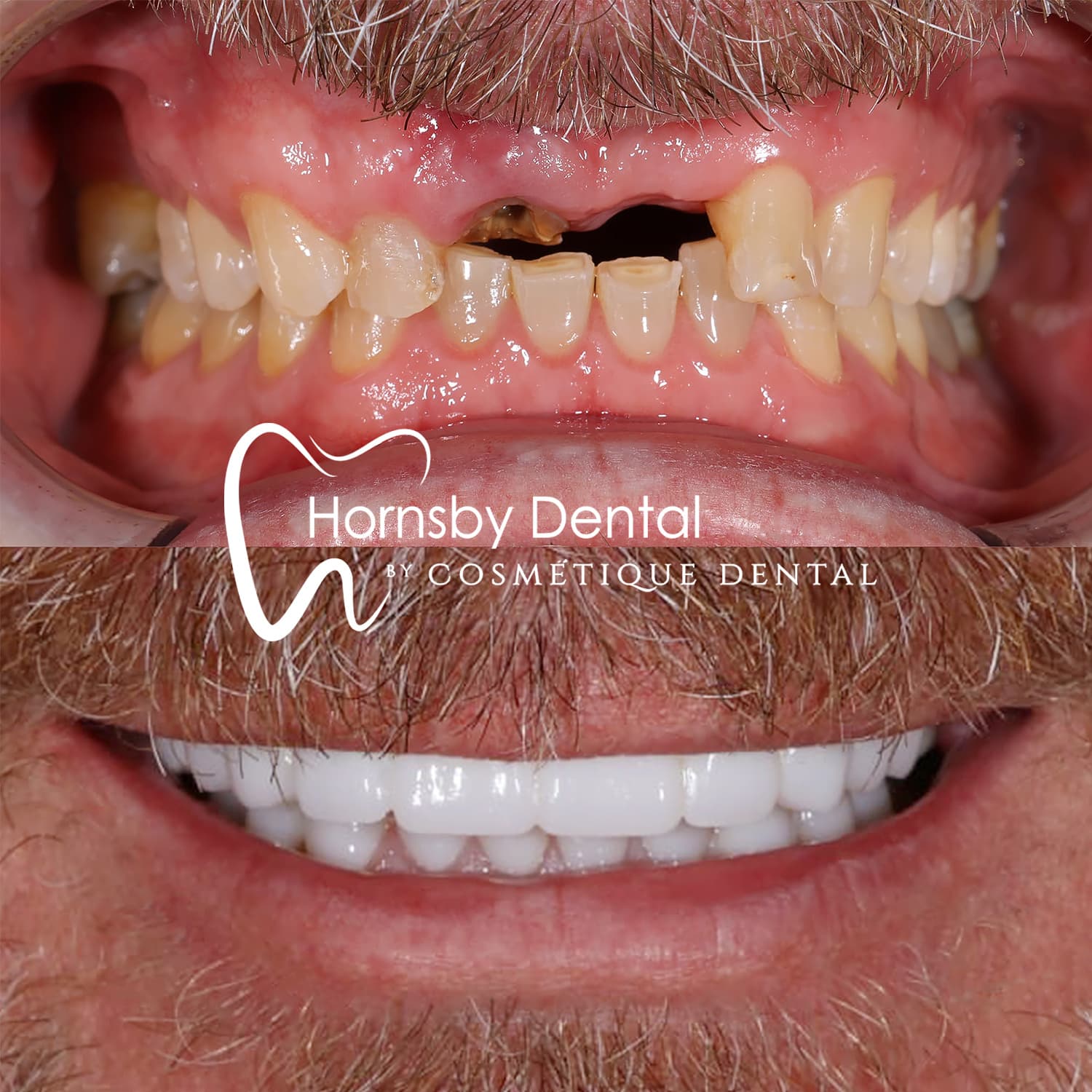
These images show the outcome for the individual patients pictured. Results vary from person to person and are not a prediction of your outcome. Any surgical or invasive procedure carries risks. Before proceeding, you should seek a second opinion from an appropriately qualified health practitioner.
Contact our team to discuss your dental care options.
Book a complimentary consultation to discuss your clinical needs, relevant treatment options, risks, limitations and alternatives.